 25 August 2026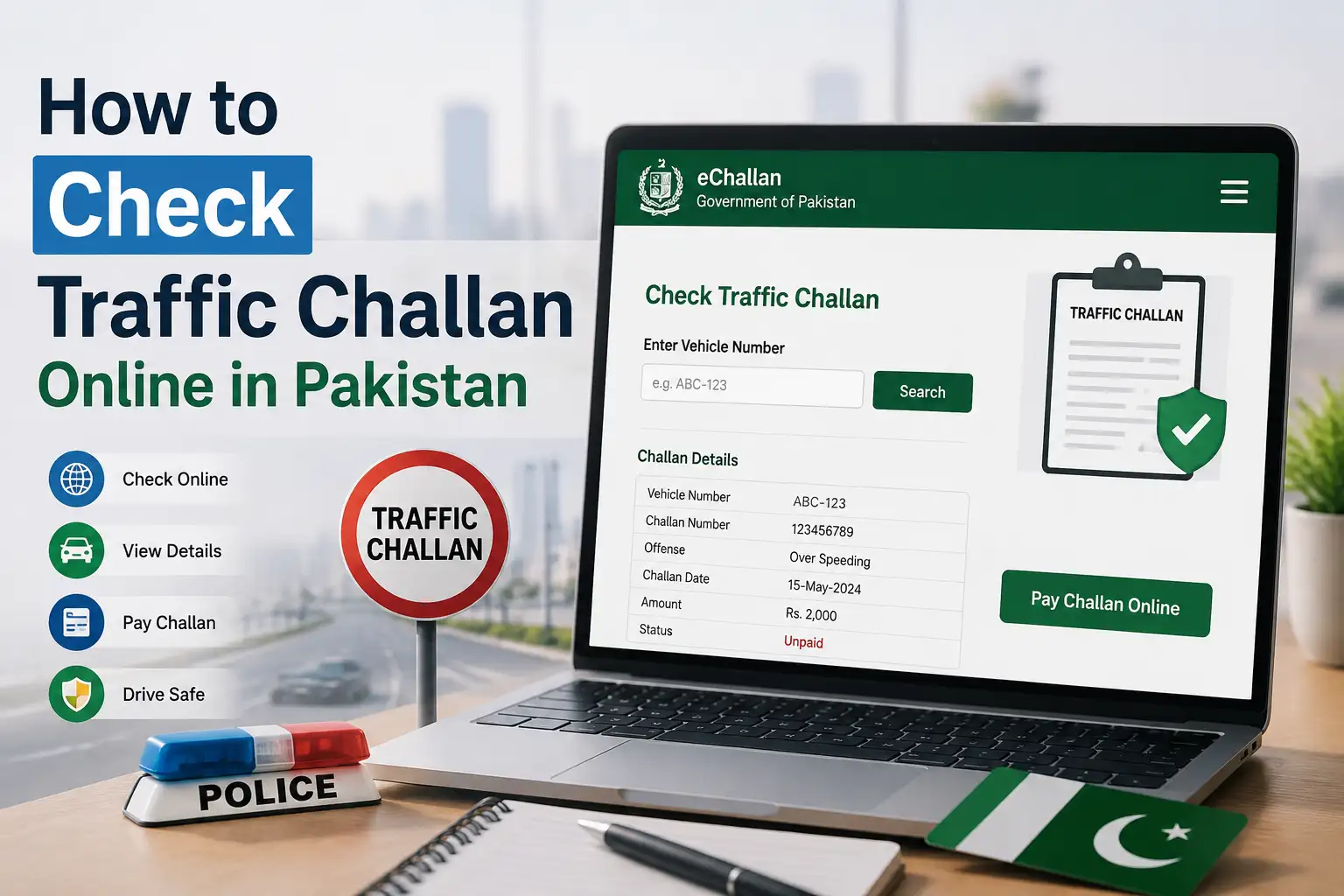
Getting a text message about a traffic violation you don't remember committing is a strange feeling. Was it really you? How much do you owe? Where did it even happen? The good news is that you don't have to guess or wait for a paper notice anymore. Almost every major city in Pakistan now lets you check and pay traffic challans online, and the whole process usually takes less than five minutes once you know where to look.
What Exactly Is an E-Challan?
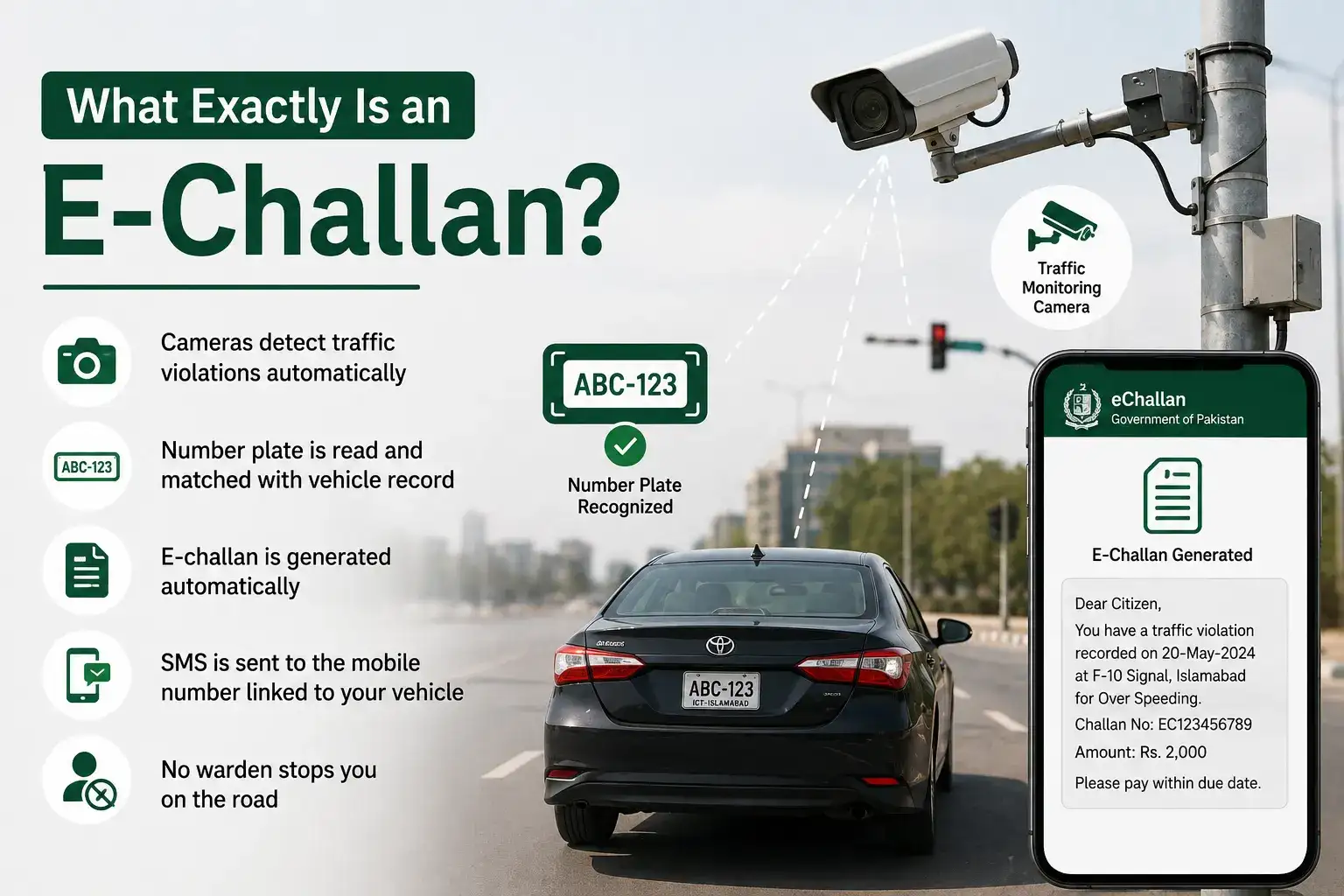
An e-challan is simply a digital version of the traffic ticket a warden used to hand you on the spot. Instead of that, cameras installed at intersections and along major roads automatically catch violations like speeding, signal jumping, illegal parking, not wearing a helmet, or lane violations. The system reads your number plate, matches it to your vehicle's registration record, and generates a fine automatically, usually followed by an SMS to the mobile number linked with your vehicle. No warden needs to physically stop you for this to happen, which is exactly why a lot of people are surprised to get a challan for something they didn't even realize was being watched.
Checking Your Challan in Punjab (PSCA)
Punjab's system is run by the Punjab Safe Cities Authority (PSCA), and it's currently the most developed e-challan network in the country, covering cities like Lahore, Rawalpindi, Faisalabad, Multan, Gujranwala, Sialkot, and Bahawalpur, with more cities being added over time.
Here's how to check your challan:
- Go to the official PSCA e-challan portal at echallan.psca.gop.pk
- Enter your vehicle registration number, or your CNIC number without dashes
- Complete the captcha verification if asked
- Hit search, and you'll see a full list of any pending or past challans, including the violation type, fine amount, date, time, location, and often a photo taken by the camera
If a challan is outstanding, you can pay it right there on the same portal using a debit or credit card, JazzCash, Easypaisa, or mobile banking. Once paid, you'll get a receipt you should hold onto, especially since unpaid challans can sometimes cause complications during vehicle transfer or token tax renewal down the line.
It's worth being cautious here too. PSCA has specifically advised people to only use their official portal and government apps for checking or paying challans, and to avoid any third party service that asks for your CNIC images, OTP codes, or wallet PIN. Plenty of independent websites offer challan checking services, and while some are genuinely convenient, never enter sensitive verification codes anywhere except the official PSCA site.
Checking Your Challan in Islamabad
Islamabad's traffic enforcement runs under the Islamabad Traffic Police (ITP), separately from Punjab's PSCA system, even though the two are sometimes confused since PSCA cameras also cover some routes leading into the capital. To check a challan issued in Islamabad, you'll need to go through the official Islamabad Traffic Police channels or the City Islamabad App, which also handles other Excise and Taxation services like token tax. If you're unsure whether your challan falls under ITP or PSCA, checking both is the safest way to be sure, since the two systems don't always share records seamlessly.
Checking Your Challan in Sindh
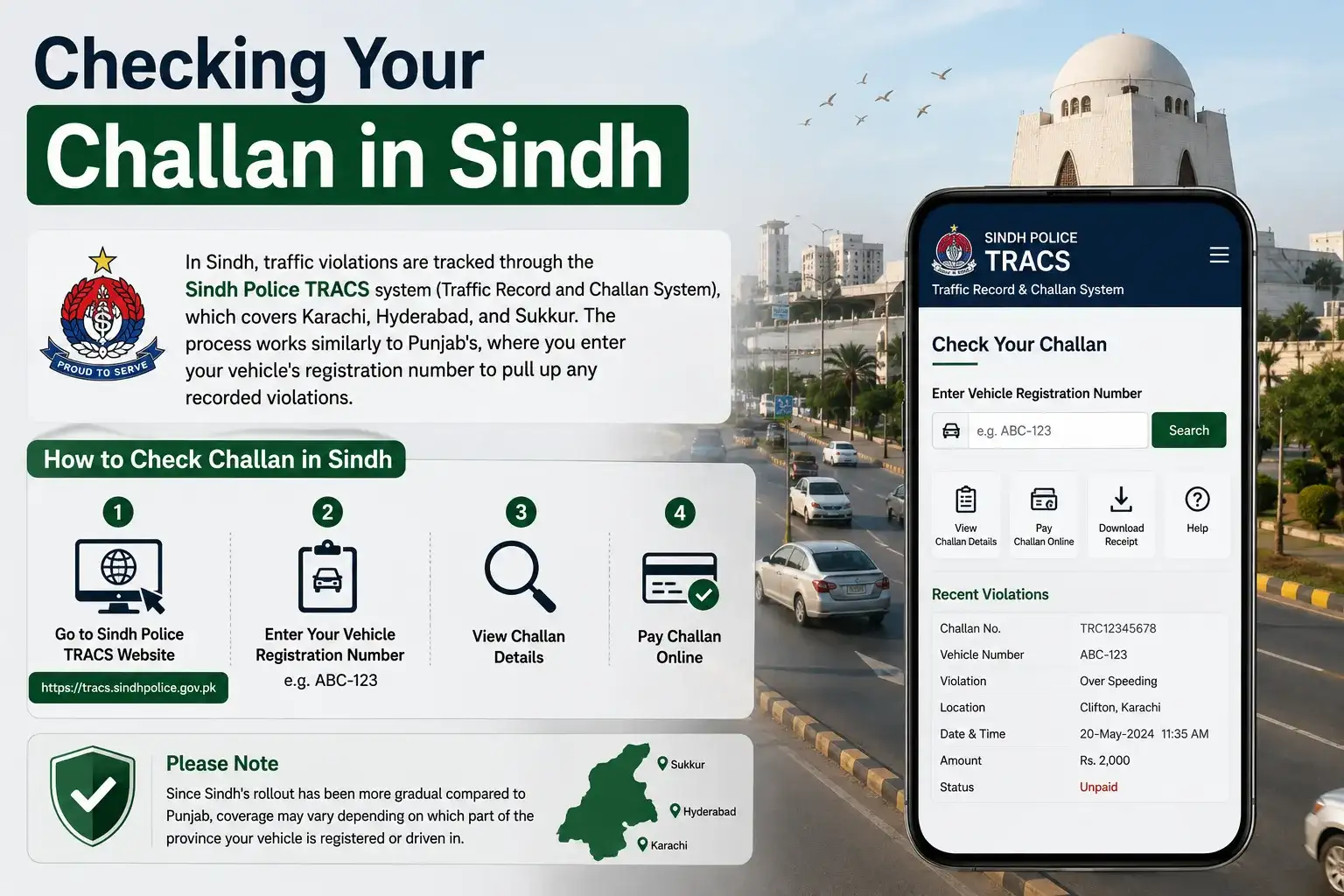
In Sindh, traffic violations are tracked through the Sindh Police TRACS system (Traffic Record and Challan System), which covers Karachi, Hyderabad, and Sukkur. The process works similarly to Punjab's, where you enter your vehicle's registration number to pull up any recorded violations. Since Sindh's rollout has been more gradual compared to Punjab, coverage may vary depending on which part of the province your vehicle is registered or driven in.
Checking Your Challan in Khyber Pakhtunkhwa
KP has rolled out its own eChallan system as well, managed through the Peshawar Traffic Police (PTP), with similar goals of moving away from paper based tickets toward automatic camera based enforcement. As with Sindh, coverage is still expanding beyond the major cities, so if you're driving in a smaller town within KP, don't be surprised if the online system doesn't show much yet.
Paying Your Challan Once You've Found It
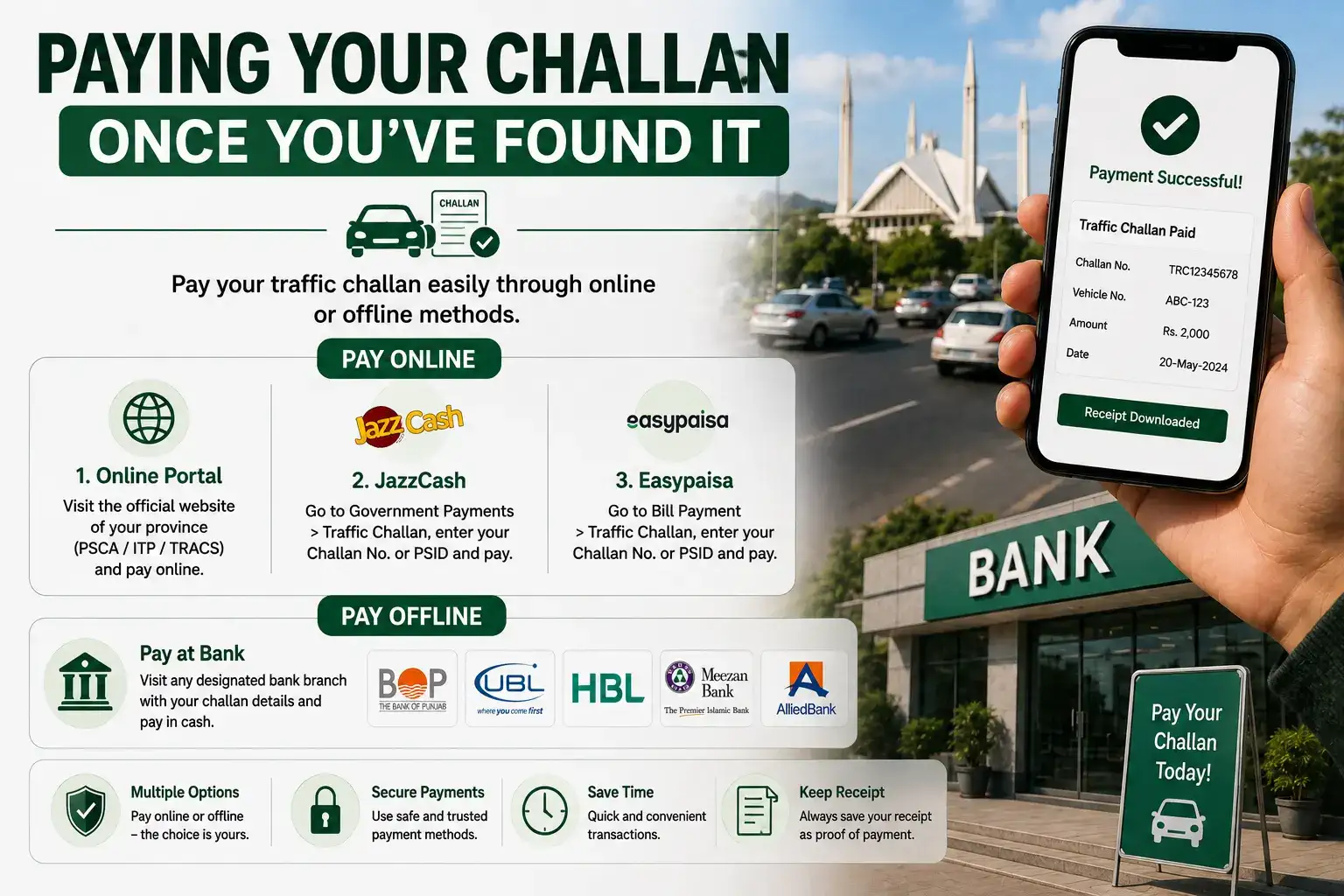
No matter which province your challan is from, payment methods tend to follow a similar pattern. Most portals let you pay directly online using a debit or credit card, or through JazzCash and Easypaisa. On JazzCash, you'd go to the government payments section, select traffic challan, choose your region, and enter your challan number or PSID (Payment Slip ID). Easypaisa follows nearly the same steps under its bill payment section. If you'd rather pay in person or don't have online banking set up, you can also visit designated bank branches, like Bank of Punjab, UBL, HBL, Meezan, or ABL, with your challan details in hand and pay in cash.
What If You Don't Remember Getting a Violation?
It's fairly common to check the portal and find a challan you genuinely don't remember, especially since camera based systems don't require a warden to stop you. Before assuming it's a mistake, check the photo evidence provided on the challan, since most systems attach a timestamped image showing the vehicle and violation. If the picture doesn't match your vehicle at all, or you believe your number plate may have been misread or cloned, most systems, including PSCA, allow you to file a dispute or appeal directly through their app or portal by selecting the challan, choosing a reason like wrong vehicle or cloned plate, and uploading supporting evidence.
Why Ignoring a Challan Isn't a Good Idea
It might be tempting to just ignore a small fine, but unpaid challans have a way of piling up quietly in the background. In several provinces, outstanding challans can now hold up processes like vehicle ownership transfer or token tax renewal until they're cleared, and letting several fines accumulate makes the eventual total a lot harder to swallow. It's a good habit to check your vehicle's challan status every month or so, just to catch anything early before it becomes a bigger hassle.
Frequently Asked Questions
Can I check my traffic challan using just my CNIC number?
Yes, on PSCA's Punjab portal, you can search using either your vehicle registration number or your CNIC without dashes, and it will show all challans linked to your record.
Is checking a traffic challan online free?
Yes, checking your challan status through official portals like PSCA, ITP, Sindh Police TRACS, or Peshawar Traffic Police is completely free. You only pay if you actually have an outstanding fine.
What happens if I don't pay my challan?
Unpaid challans can accumulate over time and, in some provinces, may cause delays or complications with vehicle transfer or token tax renewal until they're settled.
Can I dispute a challan if I think it's wrong?
Yes, most systems, including PSCA, allow you to file an appeal through their official app or portal by selecting the challan and submitting a reason along with supporting evidence.
Is it safe to use third party challan checking websites?
Many are fine for basic checking, but you should never enter your CNIC images, OTP codes, or wallet PIN anywhere except the official government portal for your province.
How Fine Amounts Are Usually Decided
Challan amounts aren't random, and understanding roughly how they're calculated can help you make sense of what shows up on your portal. Fines typically depend on the type of violation, with something like overspeeding or signal jumping generally costing more than a minor parking violation, and the exact amount can also increase based on how severe the violation was, such as how far over the speed limit you were driving. Some provinces have also introduced tiered fine structures where the amount goes up for repeat violations within a certain time period, so getting caught for the same offense multiple times in a short span can end up costing noticeably more than a one-off fine.
It's also worth knowing that fine structures do get revised periodically as provinces update their traffic policies, so an amount you remember from a year or two ago might not match what you see today. If a fine on your portal looks unusually high compared to what you expected, it's worth checking whether it reflects a repeat violation or an updated fine schedule before assuming there's been an error.
Checking your traffic challan online really doesn't take long once you know which system covers your city. A quick monthly check with your vehicle number or CNIC can save you from a pile of surprise fines later, and if something ever looks off, the appeal process is right there for exactly that reason.