 05 September 2026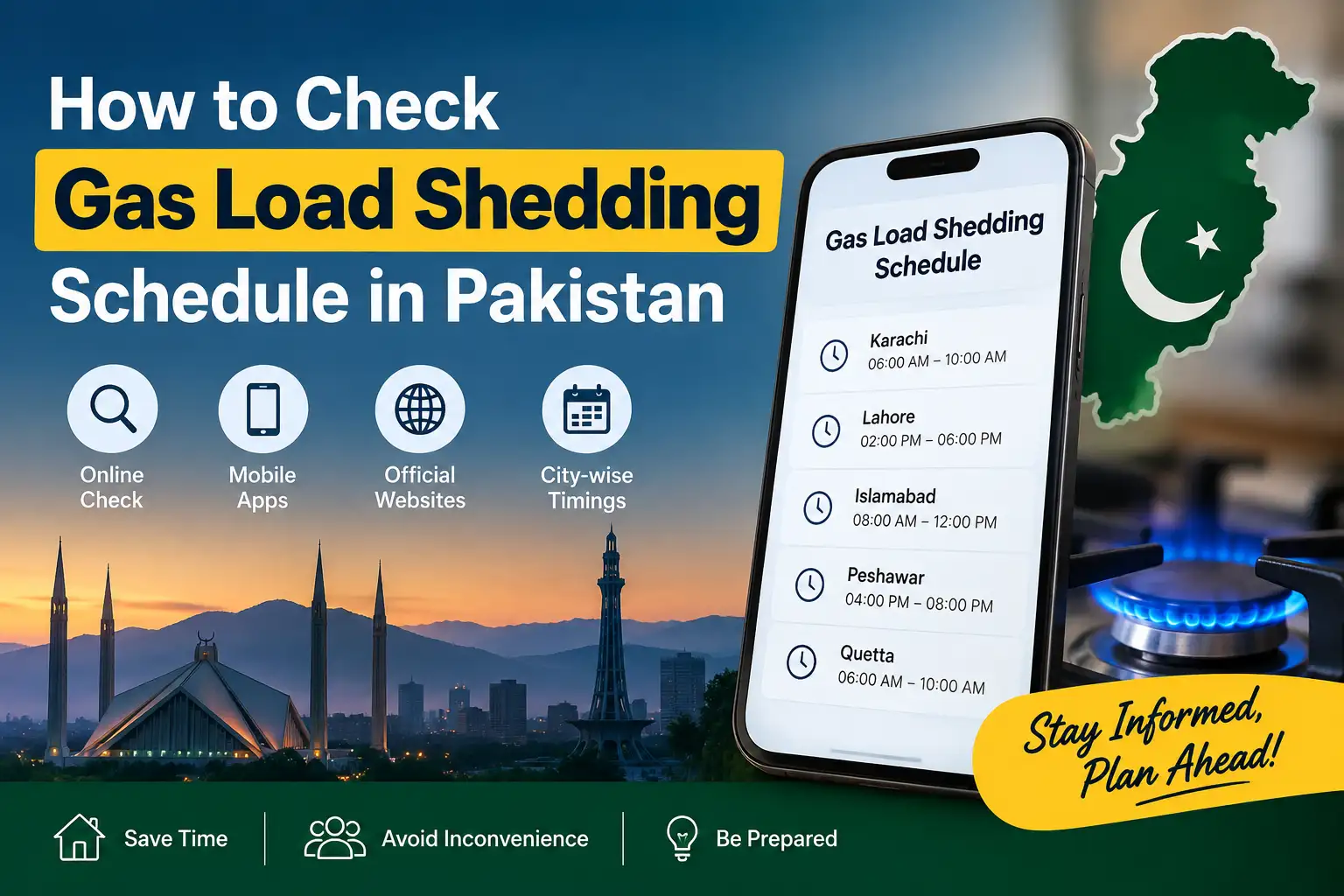
If you've ever put a pot on the stove only to find the flame barely flickering, or no gas at all, you already know how disruptive gas load shedding can be for something as basic as cooking a meal or heating water. The frustrating part isn't just the supply cuts themselves, it's not knowing when they'll happen. The good news is that both major gas companies in Pakistan publish this information, and once you know where to look, checking your area's schedule takes just a couple of minutes.
A Quick Note Before We Start
Gas load shedding in Pakistan is almost entirely a winter phenomenon. Demand spikes sharply during the cold months as households use more gas for heating and geysers, and that's when supply companies introduce fixed timing schedules to manage the shortage. Outside of winter, most areas see fairly normal, uninterrupted supply, so if you're checking this during the warmer months, there may not be an active load shedding schedule in place at all, and that's completely normal rather than a sign the information is missing.
Whatever the season, the timings that actually matter are the ones your gas company has published for the current period, not a schedule that was circulating on WhatsApp or social media last winter. Those old screenshots have a way of getting reshared every year, often without a date attached, so it's worth treating anything that isn't sourced directly from your gas company with a bit of skepticism.
Know Which Company Serves Your Area
This is the first thing to get right, since Pakistan's gas distribution is split between two separate companies, and mixing them up means you'll end up looking at the wrong schedule entirely.
Sui Northern Gas Pipelines Limited (SNGPL) covers Punjab, Khyber Pakhtunkhwa, and Azad Kashmir, including cities like Lahore, Islamabad, Rawalpindi, Faisalabad, Multan, Gujranwala, and Peshawar.
Sui Southern Gas Company (SSGC) covers Sindh and Balochistan, including Karachi, Hyderabad, Sukkur, and Quetta.
If you're not sure which one applies to you, check the name printed at the top of your gas bill, it'll say either SNGPL or SSGC clearly.
Check the Schedule on SNGPL's Official Website
If you're in an SNGPL covered area, the official source for load shedding timings is the company's own website at sngpl.com.pk. Two specific sections are what you actually want to look at: the Shut Down Notice page and the Low Pressure Notice page, both usually found under the company's news or notices section.
The Shut Down Notice page lists planned supply interruptions, including scheduled maintenance or winter load management timings, area by area. The Low Pressure Notice page covers locations currently experiencing reduced gas pressure, which is a bit different from a full shutdown but affects your supply just as noticeably. Checking both gives you the fuller picture, since a specific street or sector can show up on one list without appearing on the other.
During winter, SNGPL typically also issues a broader public announcement outlining a general supply pattern for domestic consumers across Punjab and KP, often structured as a few fixed hours in the morning, midday, and evening. This general pattern gets published through SNGPL's official channels, including their website and verified social media accounts, when the winter schedule is finalized, usually as the weather starts turning colder each year.
Check the Schedule on SSGC's Official Website
If you're in a Sindh or Balochistan area covered by SSGC, the equivalent official source is ssgcm.pk/web/, where the company publishes its own notices covering planned interruptions and pressure issues in Karachi, Hyderabad, and other cities under its network. SSGC's load management approach and timings can differ from SNGPL's, since the two companies operate independently and manage their own supply networks and shortages separately.
Other Ways to Stay Updated
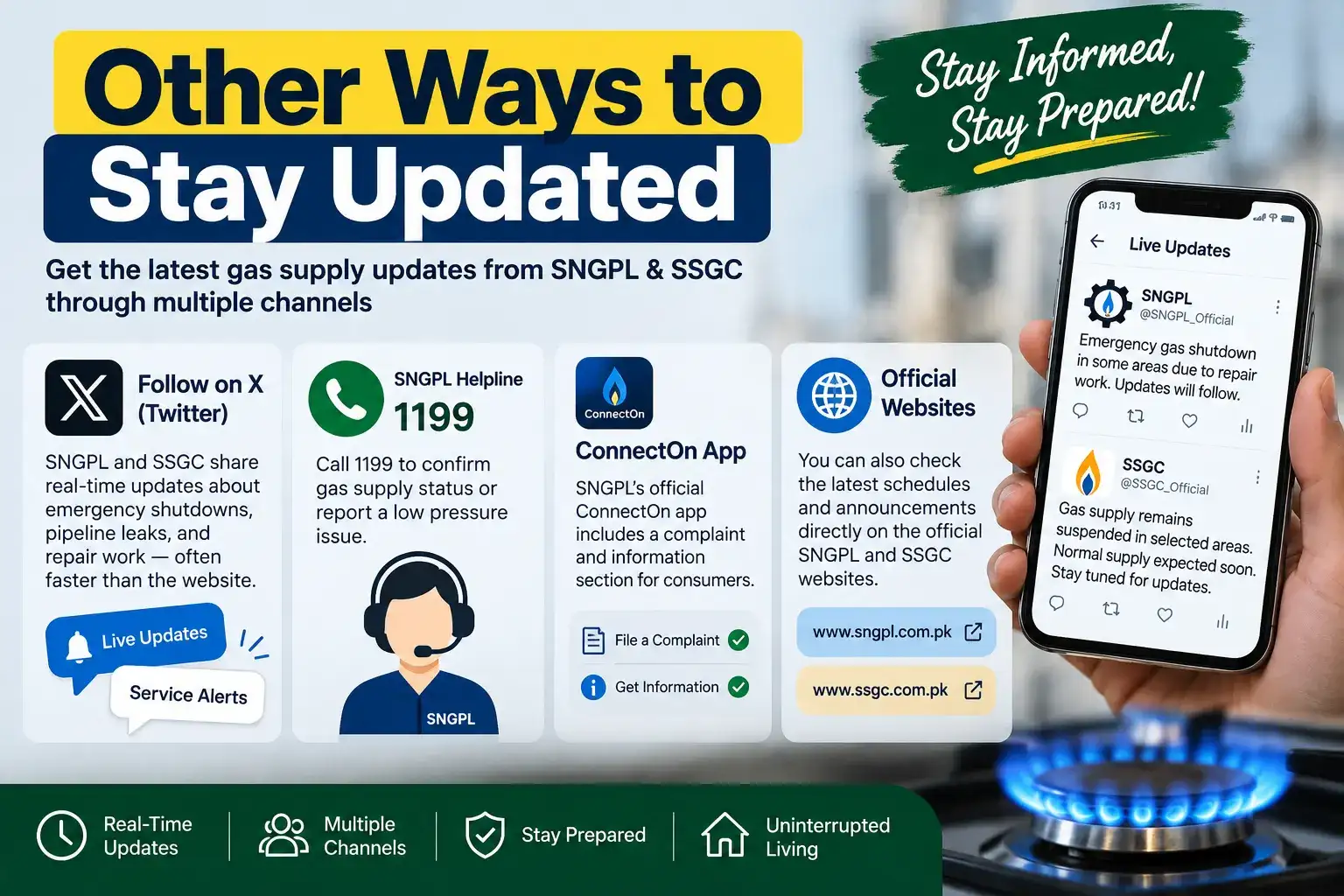
Beyond checking the website directly, both companies maintain official social media accounts, primarily on X (formerly Twitter), where they post real time updates about emergency shutdowns, pipeline leaks, or repair work, sometimes faster than these updates appear on the website itself. SNGPL also offers a helpline at 1199 for consumers who want to confirm supply status or report a low pressure issue over the phone, and the company's ConnectOn app includes a complaint and information section as well.
What to Do If Gas Isn't Coming Even During Scheduled Hours
If your gas is supposed to be available based on the published schedule but you're still getting nothing or extremely low pressure, it's worth checking a few things before assuming it's a wider area issue. Confirm the main gas valve at your meter is fully open, since a partially closed valve can look identical to a supply cut from inside the house. If that checks out, the Low Pressure Notice page on your gas company's website is the next place to look, since your specific street or sector may be listed there separately from the general schedule. If it's not listed and the problem persists, filing a complaint directly through the company's website, helpline, or app is the right next step, since unresolved pressure issues that aren't reported tend to stay unresolved.
A Word About Third Party Schedule Checkers
You'll come across a number of independent websites that offer to show your area's gas load shedding schedule just by selecting your city from a dropdown. Some of these genuinely try to stay updated, but a lot of them display general or outdated timings dressed up as current information, sometimes from a previous winter, without making that clear. Since gas timings can shift from week to week depending on pressure and pipeline conditions, and the exact schedule for any given winter isn't finalized until the company announces it, the only way to be certain you're looking at current information is to check directly on sngpl.com.pk or ssgc.com.pk, depending on which company serves your area.
Frequently Asked Questions
How do I check the gas load shedding schedule for my area?
Visit sngpl.com.pk if you're in Punjab, KP, or Azad Kashmir, or ssgc.com.pk if you're in Sindh or Balochistan, and check the Shut Down Notice and Low Pressure Notice sections for your area.
Is gas load shedding the same throughout the year?
No, it's primarily a winter issue caused by higher demand for heating and geysers. Most areas see steadier supply outside the winter months.
How can I tell if a load shedding schedule I saw online is current?
Only trust timings published directly on your gas company's official website or verified social media account. Screenshots shared on WhatsApp or social media are often outdated and undated.
What's the difference between SNGPL and SSGC?
SNGPL covers Punjab, Khyber Pakhtunkhwa, and Azad Kashmir, while SSGC covers Sindh and Balochistan. They operate independently and publish separate schedules.
What should I do if I have no gas even during my scheduled supply hours?
First check that your main valve is fully open, then check the Low Pressure Notice page for your area, and if the issue continues, file a complaint through your gas company's website, helpline, or app.
When Does the Winter Schedule Usually Get Announced?
If you're trying to plan ahead, it helps to know roughly when to expect the official announcement rather than checking every single day starting in September. Based on the pattern of recent years, SNGPL typically finalizes and publishes its winter domestic supply schedule as temperatures start dropping, usually sometime around late November or December, once demand pressure on the network becomes clear enough to plan around. Before that announcement lands, checking the schedule page daily won't turn up anything new, so it's more useful to check in periodically as the weather turns colder rather than expecting a schedule to appear in September or October.
Once the schedule is published, it typically stays in effect through the peak winter months and gets eased or lifted gradually as spring approaches and gas demand drops back to normal levels. If you want to stay on top of exactly when the announcement happens, following your gas company's official social media account is often the fastest way to catch it, since these updates tend to circulate there before most news outlets or blogs pick them up.
Making the Most of Your Supply Hours
Once a schedule is in place, a bit of planning around it goes a long way toward reducing the daily disruption. Cooking main meals, boiling water for the day, and running your geyser during the hours gas is actually flowing means you're not caught off guard when supply cuts off. Many households find it helpful to fill a thermos or insulated flask with hot water during supply hours, so there's still warm water available for tea or basic needs even after the gas goes off. If your household relies on gas heating in winter, timing room heating sessions around the scheduled hours, rather than expecting continuous warmth throughout the day, makes the whole situation noticeably more manageable.
It's also worth keeping an eye on the Low Pressure Notice page even once you know your area's general schedule, since pressure can still dip below usable levels during officially "on" hours if a lot of nearby households are drawing gas at the same time, particularly during early morning and evening peak cooking hours.
Using Backup Options Safely
A lot of households turn to alternatives like electric stoves, LPG cylinders, or portable gas heaters during load shedding hours, and while these can genuinely help, a few safety basics are worth keeping in mind. If you're using an LPG cylinder as backup, make sure it's stored upright, away from direct heat sources, and in a ventilated area, since improper storage is one of the more common causes of household gas accidents in winter. If you switch to a portable heater, always crack a window slightly for ventilation rather than sealing the room completely, since burning fuel indoors in an unventilated space poses a real carbon monoxide risk, especially overnight.
It's also worth double-checking that any burner or appliance was properly switched off before supply cuts out, since an open burner left in that position can create a hazard the moment gas pressure returns and the flame doesn't automatically reignite the way it might with some appliances. A quick habit of checking your stove knobs before leaving a room during load shedding hours is a small thing that genuinely prevents a real problem.
Checking your gas load shedding schedule really comes down to knowing which company serves your area and going straight to their official notices rather than relying on secondhand screenshots. A quick check on sngpl.com.pk or ssgc.com.pk gives you the most accurate picture of what to expect, especially once winter demand starts climbing.