 06 September 2026
Pakistan's online shopping scene has changed a lot in the last few years. More people are using smartphones, more people trust digital payments like JazzCash and Easypaisa, and more people are comfortable ordering things online instead of walking into a shop. If you've been thinking about starting an ecommerce business in Pakistan but aren't sure where to begin, you're in good company thousands of people ask this same question every month.
This guide walks through the most practical, realistic ecommerce business ideas you can start in Pakistan right now, along with what each one actually takes in terms of money, time, and effort. No fluff, no "get rich overnight" promises just a clear look at what works.
Why Ecommerce in Pakistan Is Worth Considering Right Now
Before jumping into the ideas themselves, it helps to understand why this is a good time to start.
- Mobile first shoppers. Most Pakistanis browse and buy on their phones, not laptops. This means a business built around Instagram, WhatsApp, and TikTok can compete with or even beat a traditional website.
- Digital payments are mainstream. JazzCash, Easypaisa, and bank transfers have made cash on delivery less necessary, which cuts down on returns and fraud.
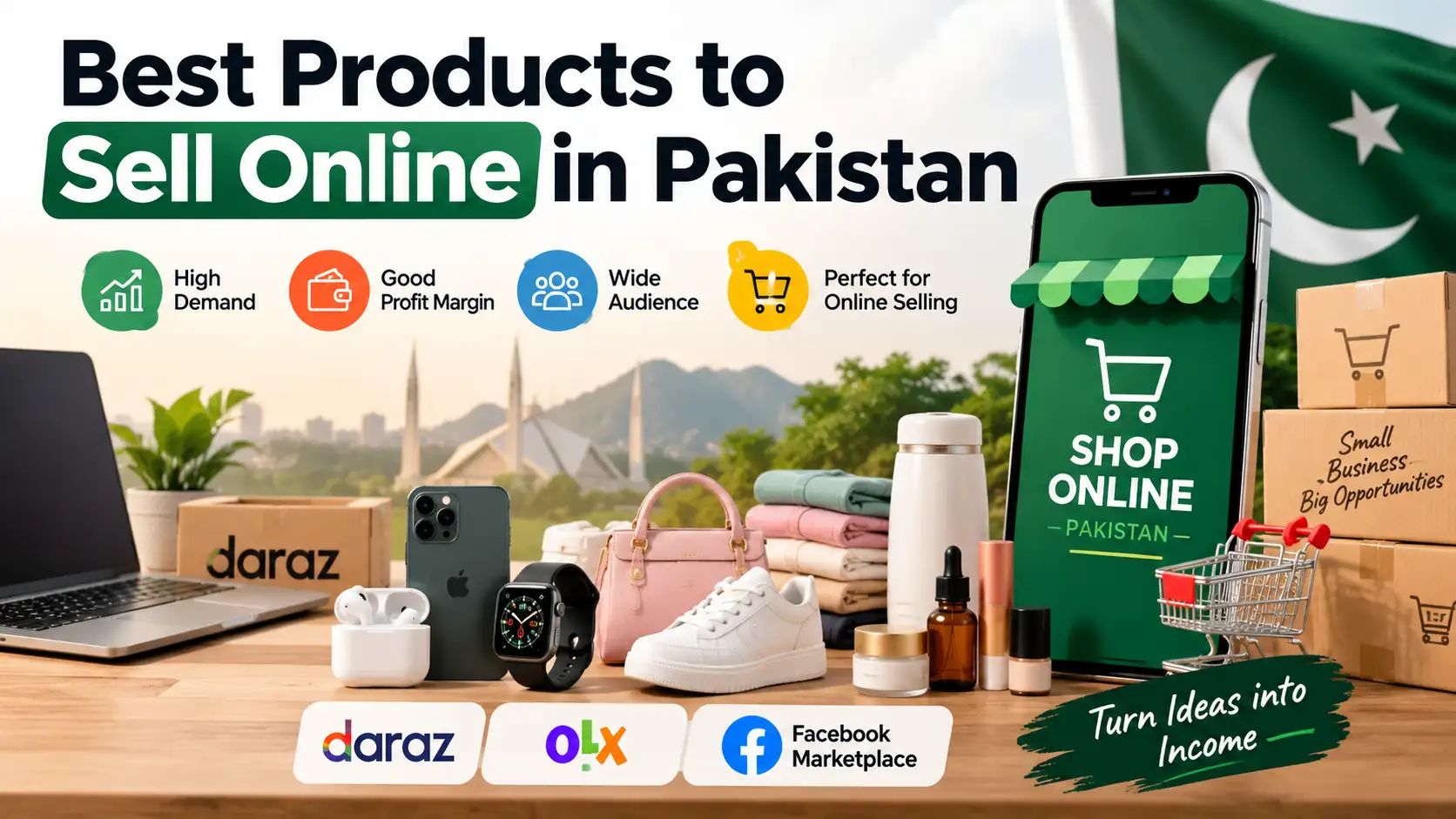
- Marketplaces do the heavy lifting. Platforms like Daraz let you reach millions of buyers without building your own website or worrying about traffic.
- Logistics have matured. Courier services such as TCS, Leopards, PostEx, and Daraz Express now deliver to smaller cities, not just Karachi, Lahore, and Islamabad.
- Low starting cost. Many of the ideas below can be started from home with a smartphone, an internet connection, and a small budget for inventory or samples.
With that context out of the way, here are the ecommerce business ideas worth your time.
1. Dropshipping
Dropshipping remains one of the easiest ways to start selling online in Pakistan because you don't need to buy or store any inventory upfront. You list products from a supplier, and when someone orders, the supplier ships it directly to the customer. Your job is marketing, customer service, and picking the right products.
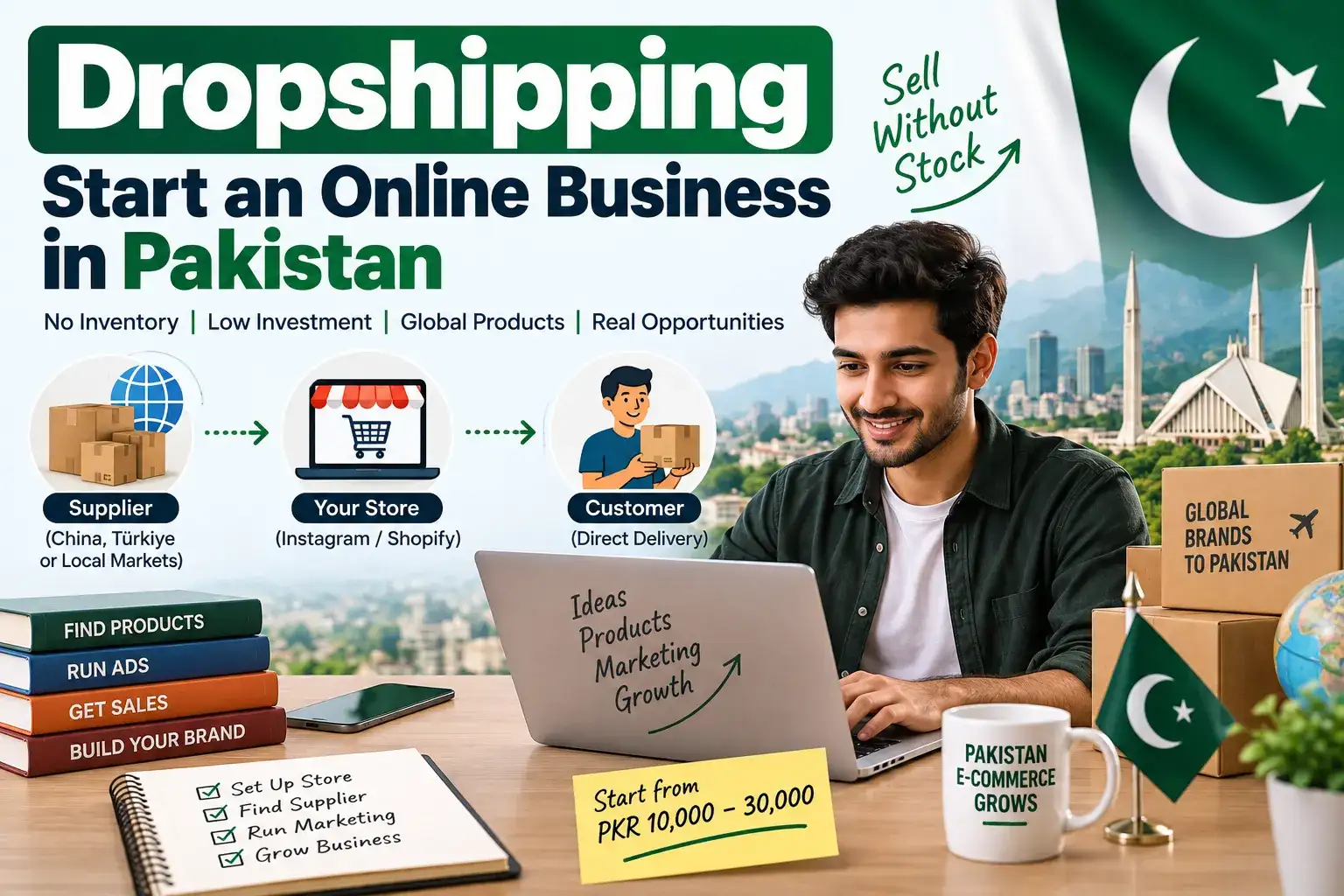
Why it works in Pakistan: Many local sellers source from China, Turkiye, or local wholesale markets like Karachi's Bolton Market or Lahore's Azam Cloth Market, then sell at a markup through Instagram or a simple Shopify store.
What you'll need: A social media page or basic website, a reliable supplier, and patience the first few sales usually take real effort in ads or organic content before momentum builds.
Realistic starting budget: As low as PKR 10,000 – 30,000 for initial marketing and sample orders.
2. Niche Clothing and Fashion Store
Fashion is one of the biggest ecommerce categories in Pakistan, and it's not slowing down. But the sellers who actually make money rarely try to sell "everything for everyone." They pick a niche modest wear, plus-size fashion, kids' clothing, formal menswear, or affordable bridal accessories and build a brand around it.
Look at how brands like Khaadi, Sapphire, and J built loyal followings: they leaned into a clear identity instead of competing purely on price. You don't need their budget to apply the same idea on a smaller scale. A well-run niche clothing page with consistent photos and honest sizing information can build real trust fast.
Profit potential: Margins on clothing typically run between 50% and 100%, depending on sourcing.
3. Beauty and Skincare Products
Skincare and beauty is a category that keeps growing every year in Pakistan, especially among younger buyers who research ingredients before purchasing. You have two main paths here:
- Reselling established brands ( local or imported ) through an online store or marketplace listing.
- Private labeling — partnering with a manufacturer to put your own brand name on products like soaps, serums, or lip care.
Private labeling takes more upfront investment but builds a real, sellable business asset over time rather than just reselling someone else's product.
4. Handmade and Artisan Products
Pakistan has a strong tradition of handicrafts, embroidery, pottery, and jewelry making. If you or someone in your network has this skill, ecommerce gives you a way to reach buyers far beyond your local market including overseas Pakistanis who love supporting authentic, handmade goods from home.
Platforms like Etsy work well for reaching international buyers, while Instagram and Daraz work better for local sales. Handmade products also tend to have strong margins because the value is in the craftsmanship, not just the raw materials.
5. Electronics and Mobile Accessories
Mobile accessories cases, chargers, earphones, power banks are consistently high-demand, low-cost items that are easy to source and ship. This category works especially well on marketplaces like Daraz and PriceOye, where buyers are already comparing prices and ready to purchase.
Tip: This is a competitive space, so success usually comes down to fast shipping, good product photos, and reliable customer service rather than having a unique product.
6. Home Decor and Kitchenware
As more young couples set up new homes and more people redecorate on a budget, home décor and kitchenware have become steady ecommerce categories. Think candles, wall art, storage solutions, or affordable kitchen gadgets. This niche also does well with visual content — short videos showing a product in use tend to convert better than plain photos.
7. Baby and Kids Products
Parents are consistent, repeat buyers, which makes this a strong niche for building a loyal customer base. Baby clothing, toys, feeding accessories, and educational products all sell well online, particularly through Facebook groups and Instagram pages targeted at mothers.
8. Print on Demand Merchandise
If you or someone you know has a following on social media even a modest one print on demand lets you sell branded merchandise like mugs, t-shirts, and phone cases without holding inventory. A local printing partner handles production once an order comes in, so your upfront risk is minimal.
9. Subscription Box Business
Subscription boxes are still fairly new in Pakistan, which means there's room to stand out. Ideas that work well locally include monthly snack boxes, skincare sample boxes, or curated gift boxes for occasions like Eid. The appeal for customers is convenience and surprise; the appeal for you is predictable, recurring revenue instead of one off sales.
10. Reselling on Daraz, OLX, and Facebook Marketplace
If building your own brand feels like too much right now, you can start simpler: resell products on existing marketplaces. Daraz gives you access to a massive built in audience without needing to drive your own traffic. OLX works well for secondhand or refurbished goods with essentially zero listing fees, though it relies more on manual trust building between buyer and seller.

This path is a great way to learn the basics of ecommerce photography, pricing, customer messages, order fulfillment before investing in your own website or brand.
11. Second Hand and Thrifted Goods
Resale is growing fast worldwide, and Pakistan is no exception, especially as more shoppers look for affordable, unique fashion. If you already have an eye for thrifting whether that's clothing, furniture, or electronics you can turn that skill into inventory for an online resale page. It requires more sourcing effort than dropshipping but usually comes with much stronger margins.
12. Grocery and Daily Essentials (Quick Commerce)
Quick commerce ultra fast delivery of groceries and daily essentials within 10 to 30 minutes is an emerging space in Pakistan's bigger cities. This model needs more investment in logistics and local warehousing, so it's not the easiest entry point for a solo entrepreneur, but it's worth watching if you're thinking bigger or considering a local delivery partnership model.
13. Digital Products Alongside Physical Ecommerce
Many successful Pakistani ecommerce sellers add digital products on the side think style guides, skincare routines, or product care e-books to complement what they already sell physically. Digital products have no shipping cost and no inventory risk, and they pair naturally with a product based brand you're already building.
How to Choose the Right Idea for You
With so many options, the right choice comes down to three honest questions:
- What can you actually source or make reliably? A great idea with an unreliable supplier will fail fast.
- How much can you afford to lose while you learn? Start with what you can afford to lose without financial stress most ecommerce businesses take a few months to become profitable.
- Where does your audience already spend time? If your ideal customers live on Instagram, don't force yourself into building a full website first. Meet them where they are.
Platforms to Consider for Selling
- Daraz — Best for instant reach and an existing customer base, especially for electronics, fashion, and daily-use items.
- Shopify — Best for building your own brand with full control over design, pricing, and customer data. Slightly higher cost, but strong long term SEO benefits.
- WooCommerce (WordPress) — A budget friendly, highly customizable option if you're comfortable with a bit more technical setup.
- Instagram and Facebook Shops — Ideal for starting with zero website cost, especially for fashion, beauty, and handmade goods.
- OLX — Best for secondhand goods and local, no fee listings.
Many sellers in Pakistan actually use a combination for example, building brand awareness on Instagram, taking orders through WhatsApp, and later expanding to Daraz or a dedicated Shopify store once demand is proven.
Common Mistakes to Avoid
- Trying to sell everything at once. Niche stores consistently outperform "sell anything" stores because they build a clear identity customers remember.
- Ignoring customer service. In a market that still relies heavily on trust and word of mouth, one bad experience can spread fast. A happy customer, on the other hand, often brings referrals.
- Underpricing out of fear. New sellers often price too low to "compete," which makes it hard to cover marketing and shipping costs. Price for sustainability, not just for the first sale.
- Skipping product photography. In a mobile-first market, your photos and short videos often matter more than your product description. Invest time here before spending money on ads.
Legal Requirements for Starting an Ecommerce Business in Pakistan
Most new sellers focus entirely on products and marketing, then get caught off guard later by paperwork. It's worth understanding the basics early, even if you start small and formalize things as you grow.
If you're just testing an idea through Instagram or a Facebook page, you can technically operate as an individual seller in the beginning. But once your business starts generating steady income, registering as a sole proprietorship with the Federal Board of Revenue (FBR) and getting a National Tax Number (NTN) becomes important not just for legal compliance, but because most payment gateways, courier services, and marketplaces like Daraz eventually ask for it before they'll fully verify your seller account.
As your business grows further, you may want to consider registering with the Securities and Exchange Commission of Pakistan (SECP) as a private limited company, especially if you're bringing in partners, applying for a business bank account, or planning to work with international suppliers or payment processors. A registered business also makes it easier to open a merchant account for JazzCash or Easypaisa business services, which builds more trust with customers than a personal account.
None of this needs to happen on day one. Many successful Pakistani ecommerce sellers start informally, prove their idea works, and formalize their business once orders are coming in consistently. But keeping basic records from the very first sale income, expenses, and supplier invoices will save you a lot of stress when it's time to register or file taxes.
Frequently Asked Questions
What is the best ecommerce business to start in Pakistan with low investment?
Dropshipping and reselling on marketplaces like Daraz or OLX are the lowest-cost ways to start, since neither requires holding inventory upfront.
How much money do I need to start an ecommerce business in Pakistan?
Many sellers start with as little as PKR 10,000 – 50,000 for initial marketing, samples, and a basic online presence. Costs go up if you're building a custom website or investing in private label manufacturing.
Do I need a website to sell online in Pakistan?
No. Many successful sellers start entirely through Instagram, Facebook, and WhatsApp before ever building a website.
Which payment methods should I offer?
Cash on delivery is still common, but offering JazzCash, Easypaisa, and bank transfer options builds trust and reduces the number of returned or refused orders.
Is ecommerce in Pakistan still profitable in 2026?
Yes. The market continues to grow as mobile internet access, digital payments, and delivery infrastructure improve, especially outside the three biggest cities.
Final Thoughts
There's no single "best" ecommerce business idea in Pakistan the right one depends on your budget, your skills, and how much time you can realistically commit. What matters more than the idea itself is execution: clear photos, honest pricing, reliable delivery, and consistent customer communication. Start small, pick one niche, and let real customer feedback guide how you grow from there.