 17 May 2026
Selling on Amazon can be a highly profitable business opportunity, but many new sellers fail because they make common mistakes that affect their sales, rankings, and profits. While Amazon provides a massive marketplace with millions of customers, competition is also extremely high.
Many beginners rush into selling without proper research, planning, or understanding how the platform works. Avoiding common mistakes can significantly increase your chances of building a successful and sustainable Amazon business.
In this comprehensive guide, we will discuss the most common Amazon seller mistakes and practical strategies to avoid them.
Why Avoiding Mistakes is Important for Amazon Sellers
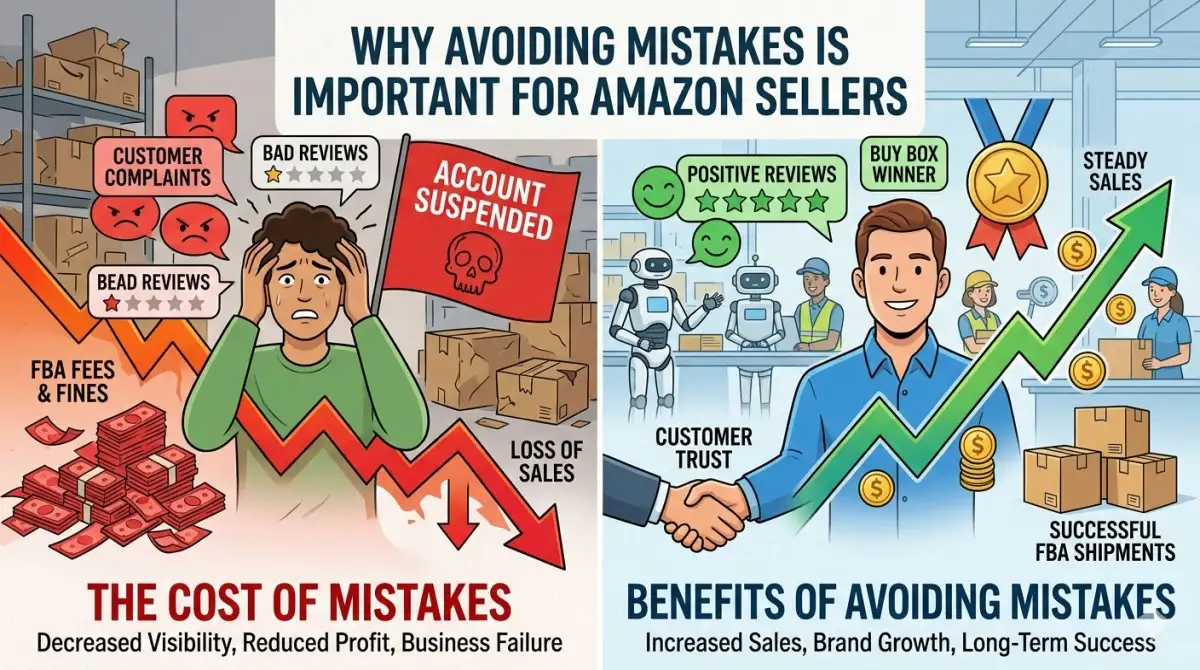
Small mistakes on Amazon can quickly lead to major problems such as poor product rankings, negative reviews, high advertising costs, and even account suspension.
By understanding common seller mistakes, you can:
Save money on unnecessary expenses
Improve product rankings
Increase customer trust
Avoid account penalties
Build a profitable long term business
Learning from other sellers’ mistakes helps you avoid costly failures.
1. Choosing the Wrong Product
One of the biggest mistakes new sellers make is selecting the wrong product to sell.
Many beginners choose products that are already extremely competitive or have very low demand. This makes it difficult to generate sales and gain visibility.
How to Avoid This
Always conduct proper product research before launching a product. Use tools like Jungle Scout or Helium 10 to analyze demand, competition, and profitability.
Look for products that have:
High demand
Moderate competition
Healthy profit margins
2. Ignoring Product Quality
Poor product quality can destroy your reputation on Amazon. Customers quickly leave negative reviews when products do not meet their expectations.
Negative reviews reduce sales and make it difficult to rank higher in Amazon search results.
How to Avoid This
Work with reliable manufacturers and always test product samples before launching your product. Quality should always be a priority when building a long-term brand.
3. Poor Product Listings
Many sellers underestimate the importance of product listings.
A poorly written title, weak description, or low quality images can significantly reduce conversion rates.
How to Avoid This
Create optimized product listings that include:
SEO friendly titles
High quality product images
Detailed bullet points
Clear product descriptions
Relevant keywords
Optimized listings help your products rank higher and attract more buyers.
4. Not Understanding Amazon Fees
Amazon charges several fees, including referral fees, fulfillment fees, and storage costs.
Many beginners launch products without calculating these costs and end up with very low profits.
How to Avoid This
Before launching a product, calculate all expenses including:
Manufacturing cost
Shipping cost
Amazon referral fees
Advertising cost
Storage fees
Understanding these costs helps you set profitable prices.
5. Ignoring Customer Reviews
Customer reviews are one of the most important ranking and trust factors on Amazon.
Products with more positive reviews usually generate more sales.
How to Avoid This
Provide excellent customer service and encourage satisfied customers to leave feedback. Tools like FeedbackWhiz can help automate review requests and monitor feedback.
6. Poor Inventory Management
Running out of stock is a common mistake that can harm your product rankings.
When your product goes out of stock, Amazon may reduce your ranking, and competitors can take your position.
How to Avoid This
Monitor inventory levels regularly and reorder products before they run out. Sellers using Fulfillment by Amazon should plan inventory shipments carefully.
7. Ignoring Amazon PPC Advertising
Many new sellers avoid advertising because they think it is expensive. However, without advertising, it can be difficult for new products to gain visibility.
How to Avoid This
Use Amazon PPC advertising to promote your listings and generate early sales. Advertising helps improve both paid and organic rankings.
Start with small budgets and optimize campaigns based on performance.
8. Setting the Wrong Price
Pricing plays a major role in attracting customers.
If your price is too high, customers may choose competitors. If it is too low, your profit margin may suffer.
How to Avoid This
Analyze competitor pricing and set competitive prices that still allow healthy profit margins.
Gradually adjust pricing based on demand and market conditions.
9. Copying Competitors Without Adding Value
Many sellers simply copy successful products without making improvements.
This strategy often fails because customers have no reason to choose your product.
How to Avoid This
Always try to improve existing products by adding new features, better packaging, or improved design.
Offering a unique value proposition helps your product stand out.
10. Not Learning Amazon SEO
Amazon has its own search algorithm that determines product rankings.
If your product listing is not optimized with the right keywords, customers may never find your product.
How to Avoid This
Learn how Amazon SEO works and include relevant keywords in your title, bullet points, and description.
Keyword research tools can help identify the most searched keywords for your niche.
Bonus Tip: Focus on Building a Brand

Many successful sellers focus on creating a recognizable brand rather than selling random products.
Branding helps build customer trust and repeat purchases.
Registering your brand through the Amazon Brand Registry program also provides additional marketing and protection benefits.
Final Thoughts
Selling successfully on Amazon requires careful planning, research, and consistent improvement. Many beginners fail because they rush into the marketplace without understanding how the platform works.
By avoiding common mistakes such as poor product selection, weak listings, poor inventory management, and ignoring advertising strategies, you can build a profitable Amazon business.
Success on Amazon comes from learning continuously, analyzing data, and improving your strategies over time. Sellers who stay patient, adapt to changes, and focus on delivering value to customers have the highest chances of long term success.