 22 August 2026
Whether it's a brother working in Dubai sending money home, a client in New York paying for freelance work, or a daughter studying in the UK wiring back some savings, receiving money from abroad in Pakistan is something millions of families and freelancers deal with every single month. And yet, most people still figure it out through trial and error losing a chunk of the transfer to a bad exchange rate, waiting days longer than necessary, or picking a method that simply isn't built for their situation.
Pakistan is actually one of the largest remittance receiving countries in the world, with overseas Pakistanis sending back tens of billions of dollars every year to support families and, increasingly, to pay freelance income into the local economy. With that much money moving across borders, it's worth understanding exactly which methods work best, what they cost, and which one fits your specific situation whether that's a one-time family transfer or a recurring freelance payment.
The Two Types of Money from Abroad - And Why the Difference Matters
Before picking a method, it helps to know which category your situation falls into, because the best option genuinely differs between the two.
Personal remittances are transfers from family or friends abroad money for household expenses, tuition, medical bills, or just general support. These are usually one time or occasional transfers, and speed plus low fees on a single transaction matter most.
Freelance and business payments are recurring income from international clients a US company paying a Lahore based developer, or a UK agency paying a Karachi based content writer. These need a setup that works repeatedly, integrates with freelancing platforms, and keeps proper documentation for tax and banking purposes. Getting this distinction right upfront saves a lot of wasted time comparing options that were never built for your situation in the first place.
1: Direct Bank Transfer ( SWIFT Wire Transfer )
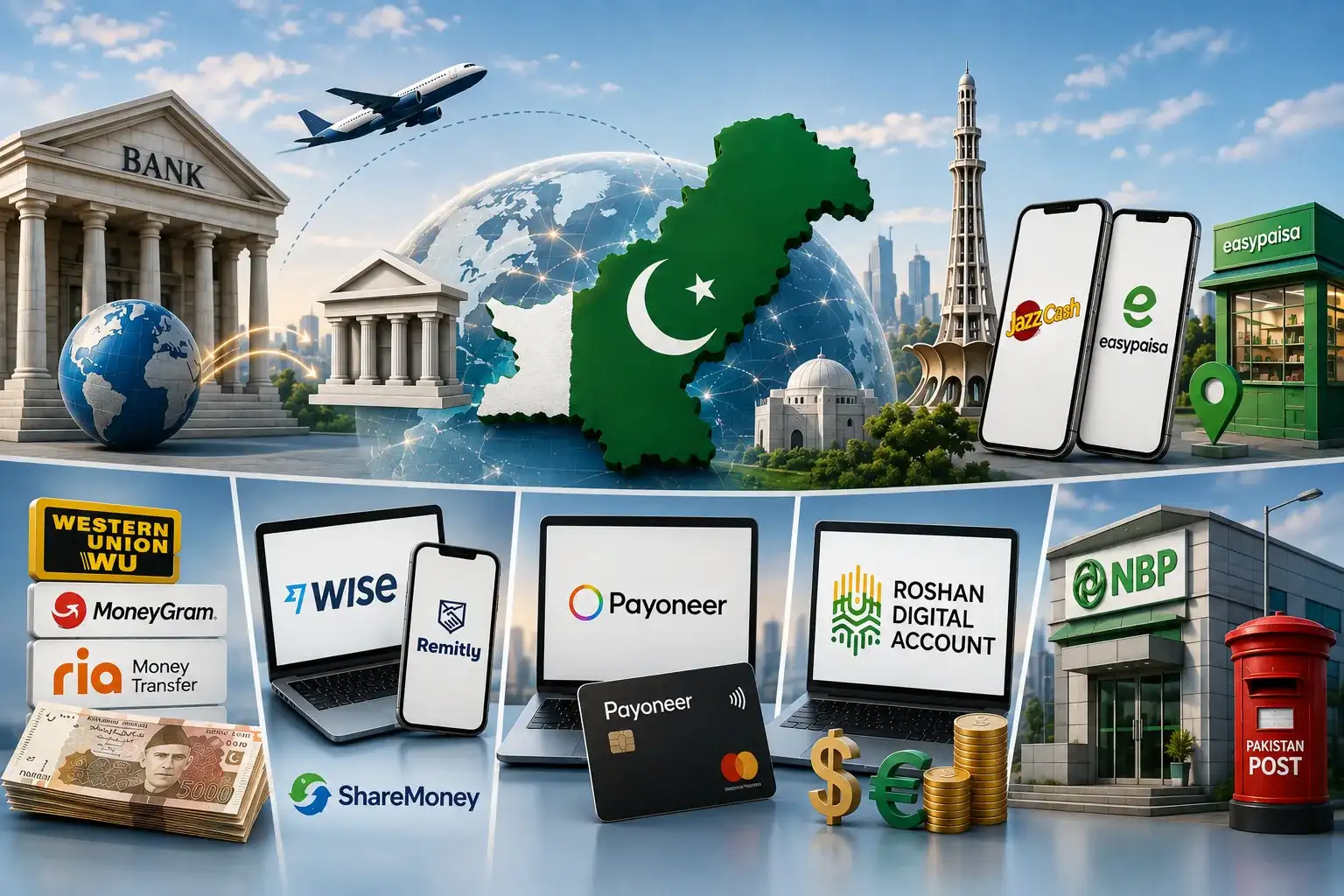
A direct bank transfer is the most traditional way to receive money from abroad, and it works with virtually every major Pakistani bank, including HBL, UBL, MCB, Bank Alfalah, Meezan Bank, and Allied Bank. The sender initiates a transfer from their own bank using the SWIFT network, and the funds land directly in your Pakistani bank account, usually converted into rupees at the bank's exchange rate.
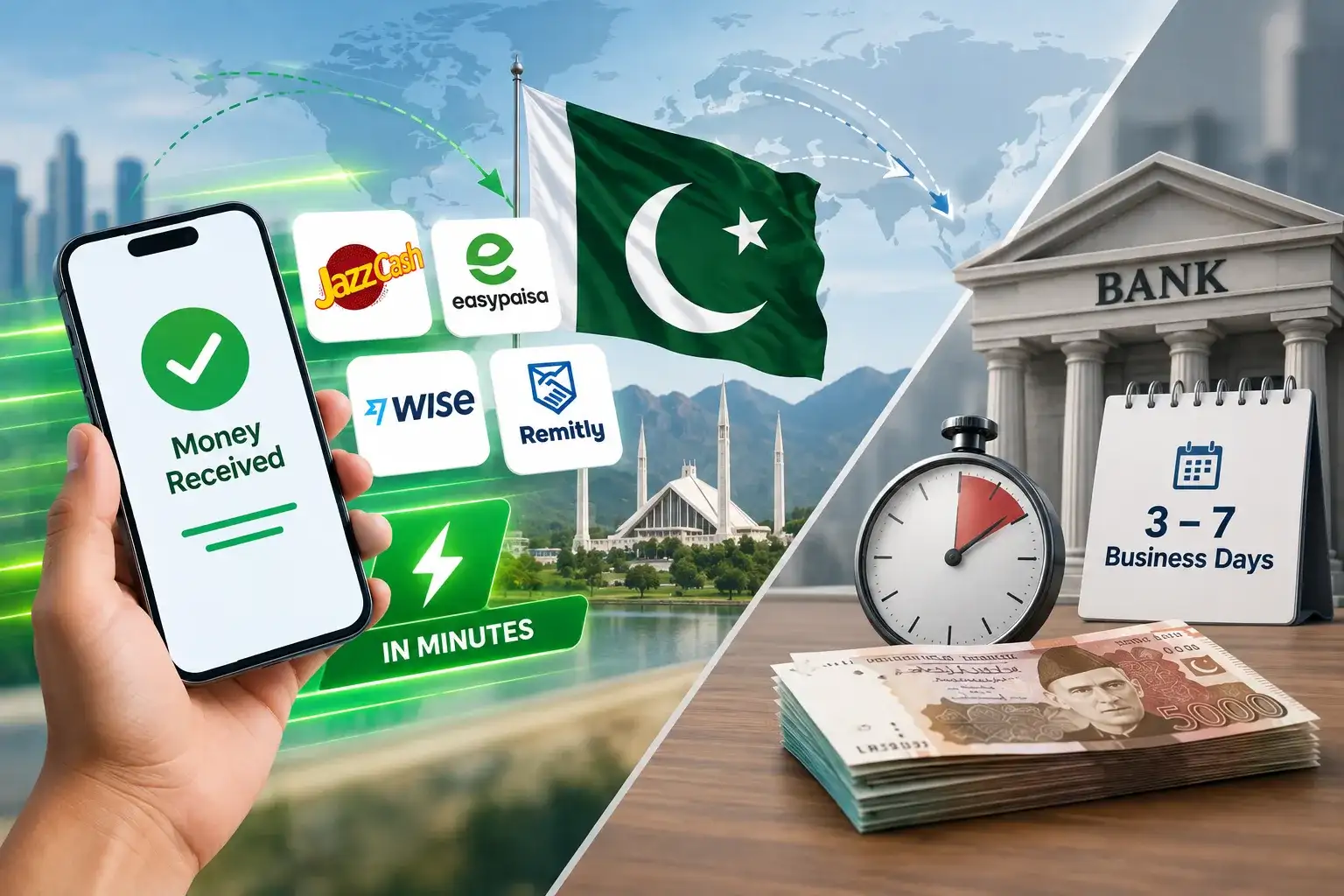
This method is reliable and works well for large, one off payments where you're not in a rush. The trade off is speed and cost SWIFT transfers commonly take anywhere from three to seven business days, and fees can range from around $10 to $50 per transaction, with the exchange rate often marked up compared to the real market rate. For a big transfer, like a property payment or a large family remittance, this is still a dependable option. For smaller or more frequent transfers, though, the fees eat into the amount received more than most people expect.
2: Mobile Wallets ( JazzCash and Easypaisa )
For everyday remittances, especially to family members who don't have easy access to a traditional bank branch, JazzCash and Easypaisa have become the go to option across Pakistan. Both mobile wallets let a sender abroad transfer money directly into the recipient's mobile account, and the funds are typically available almost instantly, with cash out possible at agent locations spread across the country, including in smaller towns and rural areas where bank branches are scarce.
This method works particularly well for recipients who are unbanked or live outside major cities, since JazzCash alone operates through well over 80,000 agent locations nationwide. It's fast, doesn't require the recipient to have a formal bank account, and skips a lot of the paperwork associated with wire transfers.
3: Cash Pickup Services
Services like Western Union, MoneyGram, and Ria let the sender transfer money that the recipient then collects in cash from a local agent location often a bank branch, exchange company, or a dedicated remittance counter. Pakistan has tens of thousands of these pickup points, making this one of the most accessible options for recipients in areas with limited banking infrastructure.
The appeal here is simplicity: no bank account is required, and cash is often available for pickup within minutes of the sender completing the transfer. The downside is that exchange rates on cash pickup services tend to be less competitive than dedicated online transfer apps, and fees can add up quickly on smaller transfers.
4: Online Money Transfer Apps ( Wise, Remitly, ShareMoney )
Dedicated money transfer apps have become one of the most cost-effective ways to receive money in Pakistan, particularly for people who receive transfers regularly. Wise is known for using the real mid-market exchange rate with transparent, upfront fees instead of hiding costs inside a marked up rate, which typically means more rupees actually landing in the recipient's account compared to a traditional bank wire. Remitly and ShareMoney work similarly, letting the sender choose between bank deposit, mobile wallet credit, or cash pickup, often with the first transfer offered fee-free as a new user incentive.
These apps are generally the better choice for families who receive support regularly rather than as a rare, one time event, since the savings on fees and exchange rates compound with every transfer. One important detail specific to Pakistan: while these apps make it easy to receive money from a sender abroad, Pakistani residents currently can't open certain multi currency wallet features themselves, since regulatory restrictions limit which financial tools are available directly within the country. The receiving side, though, works smoothly regardless.
5: Payoneer ( Best for Freelancers and Remote Workers )
For freelancers and remote workers, Payoneer has become close to the industry standard for receiving international payments in Pakistan. It integrates directly with major freelancing platforms like Fiverr, Upwork, and Amazon, so instead of a client sending money the traditional way, payment goes straight into your Payoneer account, which you then withdraw to your local Pakistani bank account in rupees.
The reason Payoneer works so well for freelance income specifically is that it's built around exactly this use case recurring payments from multiple international sources, with reasonably transparent fees and a receiving account that behaves like a local account from the sender's side. For anyone earning through freelancing platforms, setting up Payoneer early is genuinely one of the first things worth doing, since several major platforms don't offer many alternative payout options for Pakistani users.
6: Roshan Digital Account ( For Overseas Pakistanis )
If you're an overseas Pakistani rather than someone simply receiving family support, the Roshan Digital Account is worth knowing about. Launched by the State Bank of Pakistan, it lets non resident Pakistanis open a bank account entirely online in rupees or in foreign currency without needing to visit Pakistan in person, and the account can only be funded from outside the country. Since its launch, inflows into these accounts have crossed well over $12 billion, reflecting how widely overseas Pakistanis have adopted it for everything from property investment to Pakistan Stock Exchange trading. It's a solid option for anyone abroad who wants more control over how their money is held and invested, rather than just passing straight through to a recipient.
7: NBP and Pakistan Post ( Free, No Bank Account Option )
The National Bank of Pakistan offers a service that lets recipients collect remitted funds even without an NBP account, using their CNIC as identification. The sender specifies the recipient's ID information, and the money can be picked up from any NBP branch. Pakistan Post branches also allow beneficiaries to collect certain remittance payments free of charge, which makes this one of the more accessible options for recipients in smaller towns without convenient access to private banks or fintech apps.
What About PayPal?
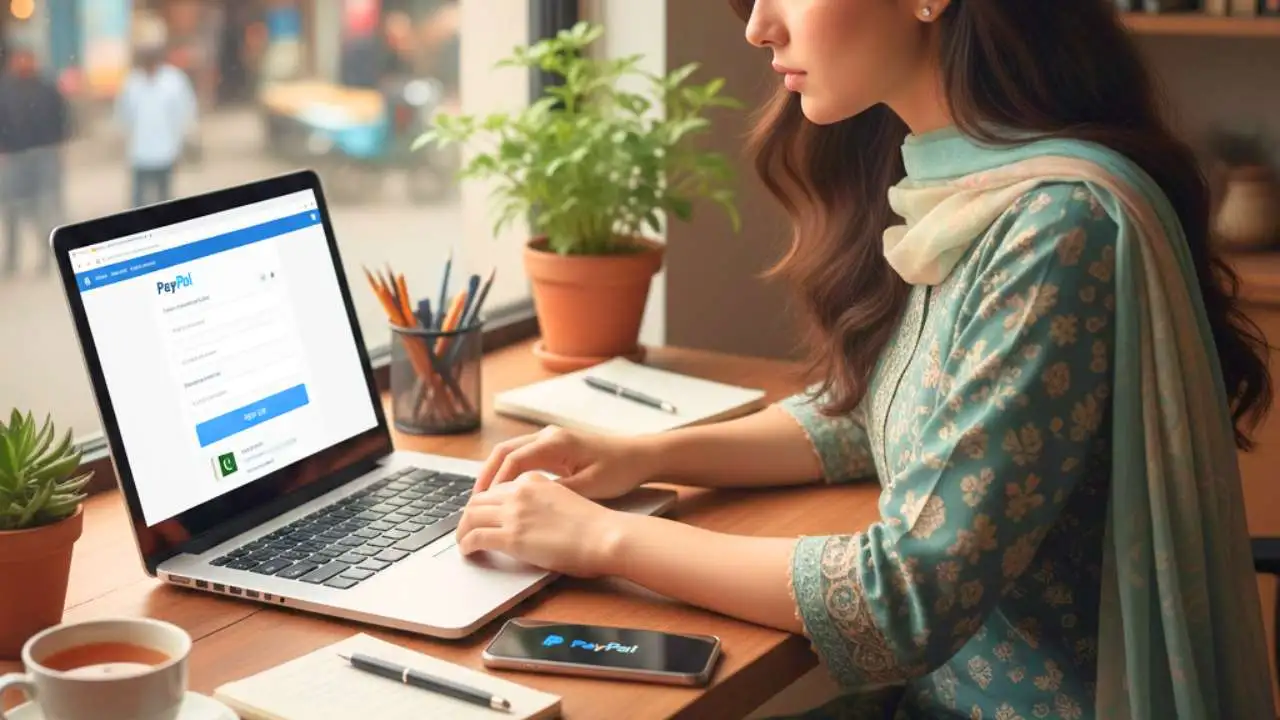
This trips up a lot of people: PayPal does not operate in Pakistan, and Pakistani residents cannot open a PayPal account to receive money directly. If a client insists on paying through PayPal, the workaround most freelancers use is Xoom, PayPal's international transfer service, which allows a sender with a PayPal account to transfer funds directly into a Pakistani bank account the recipient never needs a PayPal account of their own. It's a reasonable workaround, but it's worth setting expectations with international clients early, since many assume PayPal works everywhere.
Comparing the Methods at a Glance
For a one time family transfer, mobile wallets or a dedicated transfer app like Wise or Remitly usually offer the best combination of speed and low cost. For a large, infrequent payment like a property purchase, a direct bank wire remains the safer, more traditional route despite the higher fees. For recurring freelance income, Payoneer is close to essential, since it's built specifically around that use case and integrates directly with the platforms most Pakistani freelancers already use. And for recipients without a bank account or in areas with limited banking access, cash pickup services or NBP's ID based collection system remain the most practical options.
A Word on Documentation and Taxes
Any money you receive from abroad, whether it's freelance income or family support, is worth keeping a basic record of the date, amount, sender, and method used. For freelancers specifically, this matters more than it might seem, since the State Bank of Pakistan requires a share of freelance foreign exchange earnings to be properly repatriated through documented banking channels rather than informal transfer networks. Freelance income is generally treated as taxable business income once it crosses the exemption threshold set by the FBR, and many freelancers register with the Pakistan Software Export Board to access reduced tax rates available specifically for IT and IT enabled service exports. Sticking to recognized channels like Payoneer, Wise, or a proper bank transfer rather than informal cash based networks like Hundi or Hawala keeps your income properly documented and avoids complications with unexplained income queries down the line.
How to Avoid Losing Money to a Bad Exchange Rate
One of the most overlooked ways people lose money on international transfers isn't the fee it's the exchange rate itself. Many banks and transfer services advertise zero fees or low fees, but make up the difference by giving you an exchange rate that's noticeably worse than the real, mid-market rate you'd see quoted on Google or in global currency markets. On a transfer of a few hundred dollars, that markup might only cost you a small amount, but for larger or recurring transfers, it adds up fast sometimes to the equivalent of a proper transfer fee hiding inside the numbers.
The simplest way to protect yourself is to check the actual mid market rate before accepting any transfer, then compare it against what the bank or app is actually offering. Services like Wise are specifically built around passing through the real exchange rate with a transparent, separate fee, which is why they tend to come out ahead of traditional banks for recurring transfers. If you're receiving support from family regularly, it's worth spending five minutes comparing two or three services side by side before settling on one that small habit alone can mean noticeably more rupees landing in your account every single month.
What to Do If a Transfer Doesn't Arrive on Time
Delayed transfers happen more often than people expect, and knowing what to check first can save a lot of unnecessary panic. Start by confirming the transaction reference or tracking number with the sender nearly every major transfer service, from Western Union to Wise to a standard bank wire, provides one, and it lets you check the transfer's status directly rather than guessing. Bank transfers routed through the SWIFT network sometimes get held up at an intermediary bank along the way, which is a normal part of the process and usually resolves within the stated delivery window rather than being a sign something's gone wrong.
If a transfer is genuinely overdue, the sender's bank or service provider is almost always the right first point of contact, since they initiated the transaction and can trace it through the system faster than the receiving side can. It's also worth double checking that the recipient details account number, IBAN, or mobile wallet number were entered correctly, since a single incorrect digit is one of the most common reasons a transfer gets delayed or, in rare cases, sent to the wrong account entirely. Keeping a habit of confirming recipient details out loud with the sender before every transfer, rather than just copy-pasting old information, prevents most of these issues before they start.
Setting Up a System for Regular International Payments
If you're receiving money from abroad on a recurring basis whether that's monthly family support or ongoing freelance income it's worth setting up a proper system rather than handling each transfer as a one off event. That starts with picking one primary method that fits your situation (Payoneer for freelance income, a dedicated app like Wise for regular family remittances) and sticking with it, rather than switching providers every few months chasing marginally better rates. Consistency makes it far easier to track what's coming in, spot any missed or delayed payments quickly, and keep clean records if you ever need to explain your income to a bank or tax authority.
It also helps to agree on a simple routine with the sender a fixed day of the month for family remittances, for example, or a standard invoicing process for freelance clients so neither side is left guessing when the next payment is due. For freelancers specifically, keeping a simple spreadsheet of every payment received, including the date, client, amount, and method, turns what could be a stressful scramble at tax time into a five minute copy paste job. It's a small amount of upfront organization that saves a disproportionate amount of hassle later.
What is the fastest way to receive money from abroad in Pakistan?
Mobile wallets like JazzCash and Easypaisa, along with dedicated transfer apps like Wise and Remitly, are generally the fastest, often delivering funds within minutes. Traditional bank wire transfers, by comparison, typically take three to seven business days.
Can I receive money from abroad without a bank account?
Yes. Mobile wallets, cash pickup services like Western Union and MoneyGram, and NBP's CNIC-based collection system all let you receive money without needing a formal bank account.
Is it safe to use mobile wallets like JazzCash or Easypaisa for international remittances?
Yes, both are regulated by the State Bank of Pakistan and are widely used for both domestic and international transfers, with tens of thousands of agent locations available for cash-out.
How do freelancers in Pakistan typically get paid by international clients?
Payoneer is the most common method, since it integrates directly with platforms like Fiverr and Upwork. Direct bank wire transfers and services like Wise are also used, particularly for clients who pay outside of a freelancing platform.
Do I have to pay tax on money received from abroad?
Family remittances sent through proper banking channels are generally not taxed as income. Freelance or business income received from abroad, however, is treated as taxable income once it crosses the FBR's exemption threshold, so it's worth keeping records and, if your income is substantial, consulting a tax professional.