 25 April 2026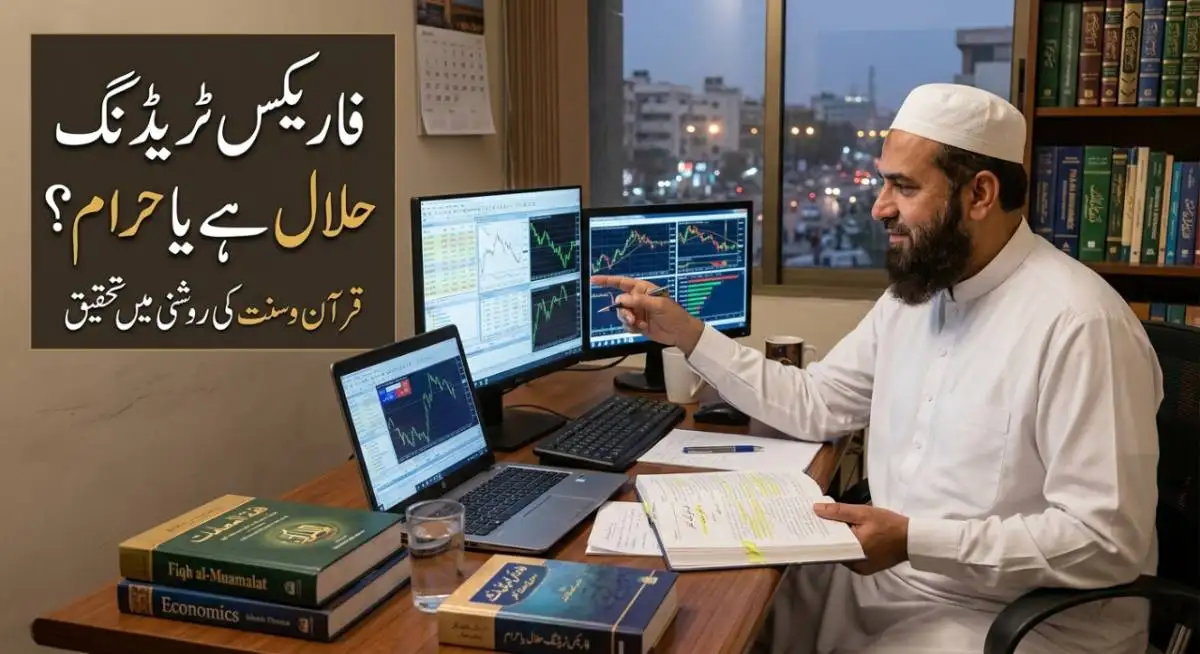
Forex trading has become one of the most popular online investment methods worldwide. Many Muslims, especially in countries like Pakistan, are interested in forex trading but often ask an important question: Is forex trading halal or haram in Islam?
Islamic finance has clear rules about money, interest, and financial transactions. Because forex trading involves currency exchange, leverage, and sometimes interest charges, scholars have different opinions regarding its permissibility.
In this comprehensive guide, we will explain whether forex trading is halal or haram, the Islamic principles involved, and how Muslim traders can trade forex in a halal way.
What is Forex Trading?
Forex trading (foreign exchange trading) involves buying and selling currencies in order to profit from price fluctuations. The forex market is the largest financial market in the world, with trillions of dollars traded every day.
In forex trading, currencies are traded in pairs such as:
- EUR/USD
- GBP/USD
- USD/JPY
- USD/CHF
Traders try to profit from the changes in exchange rates between two currencies.
Islamic Principles Related to Trading
To determine whether forex trading is halal or haram, we need to understand some basic principles of Islamic finance.
1. Prohibition of Riba (Interest)
In Islam, charging or paying interest is strictly prohibited. This rule is based on the teachings of the Quran and Islamic jurisprudence.
Many forex brokers charge swap fees (overnight interest) when a trade remains open overnight. Because these swaps involve interest, they may make forex trading haram.
2. Avoidance of Gharar (Excessive Uncertainty)
Islamic finance discourages transactions that involve excessive uncertainty or speculation.
If forex trading becomes similar to gambling or highly speculative behavior, some scholars believe it may violate this principle.
3. Immediate Exchange in Currency Transactions
According to many Islamic scholars, currency exchange should occur immediately (spot transaction) rather than being delayed.
Traditional forex trading often uses leveraged contracts rather than actual currency exchange, which creates debate among scholars.
Why Some Scholars Consider Forex Trading Haram
Some Islamic scholars believe forex trading is not permissible for the following reasons:
Interest Based Swap Fees
Many brokers charge interest when positions remain open overnight. Since Islam prohibits interest, this becomes a major issue.
Excessive Speculation
Forex markets can be extremely volatile, and many traders participate purely for speculation, which may resemble gambling.
Use of Leverage
Leverage allows traders to control large positions with small deposits. Some scholars argue that leveraged trading creates financial risk and uncertainty that conflicts with Islamic principles.
Why Some Scholars Consider Forex Trading Halal
Other scholars believe forex trading can be halal if certain conditions are met.
Use of Islamic Trading Accounts
Many brokers now offer Islamic or swap free accounts where overnight interest charges are removed. Platforms such as MetaTrader 4 and MetaTrader 5 are often used with these accounts.
Spot Trading
If currency exchange occurs instantly and without interest, some scholars consider it similar to traditional currency exchange at a money changer.
Responsible Trading
If traders avoid gambling like behavior and follow proper risk management, some scholars consider trading permissible.
What is an Islamic Forex Account?
An Islamic forex account is designed to comply with Shariah law. These accounts remove interest based swap fees and operate according to Islamic financial principles.
Features of Islamic trading accounts usually include:
- No swap or overnight interest charges
- No hidden interest based fees
- Immediate trade execution
- Compliance with Islamic finance rules
These accounts allow Muslim traders to participate in forex trading while trying to follow religious guidelines.
Forex Trading vs Gambling in Islam
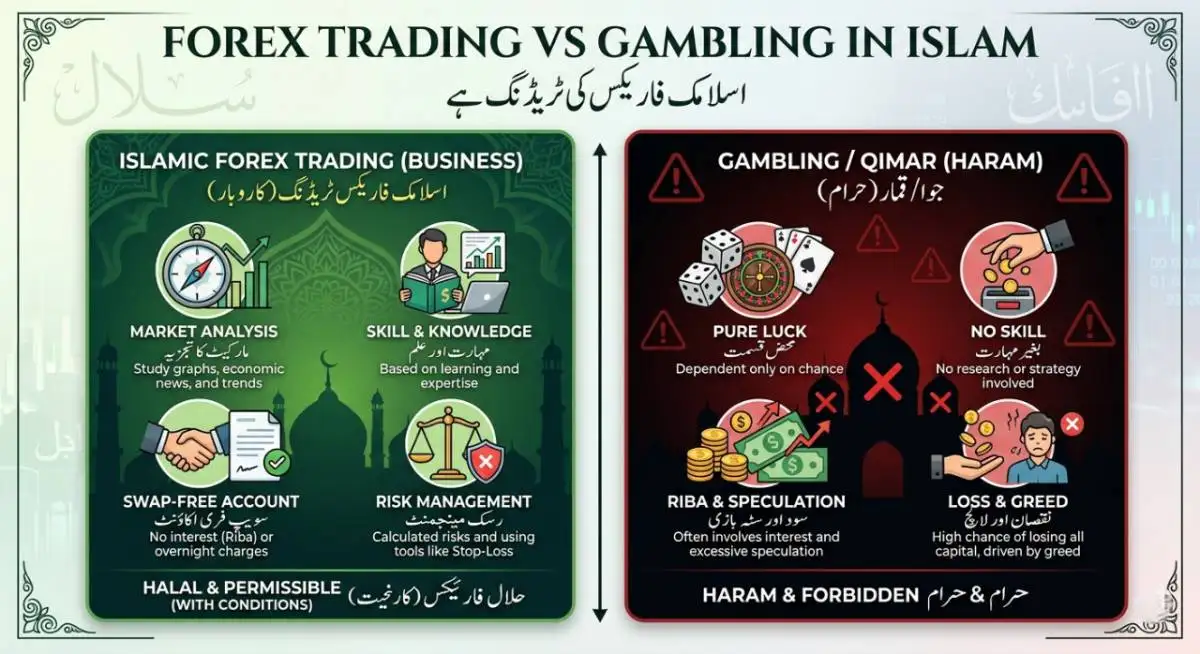
One of the biggest concerns about forex trading is whether it resembles gambling.
Gambling involves pure chance, while trading involves market analysis, research, and decision-making.
If traders rely purely on luck without knowledge or strategy, the activity may resemble gambling. However, when traders use analysis and risk management, many scholars consider it a legitimate business activity.
Tips for Halal Forex Trading
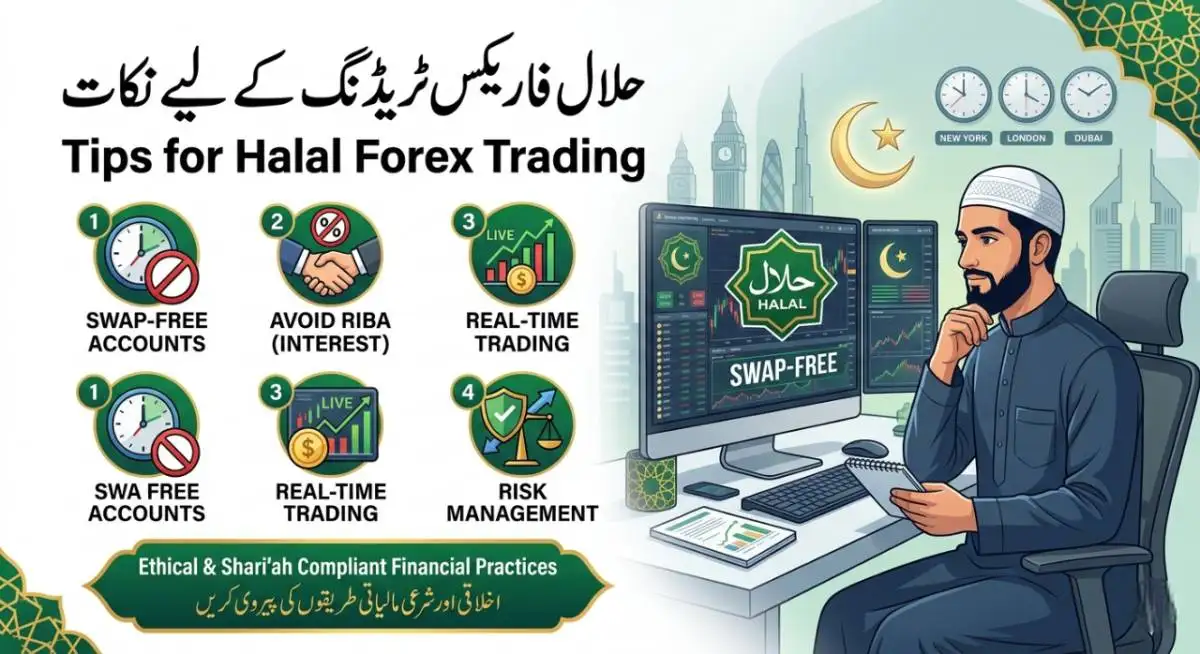
Muslim traders who want to participate in forex markets while following Islamic principles should consider these tips.
Use Swap Free Islamic Accounts
Choose brokers that provide Islamic accounts without interest charges.
Avoid Excessive Leverage
Using extremely high leverage can increase risk and speculation.
Focus on Knowledge
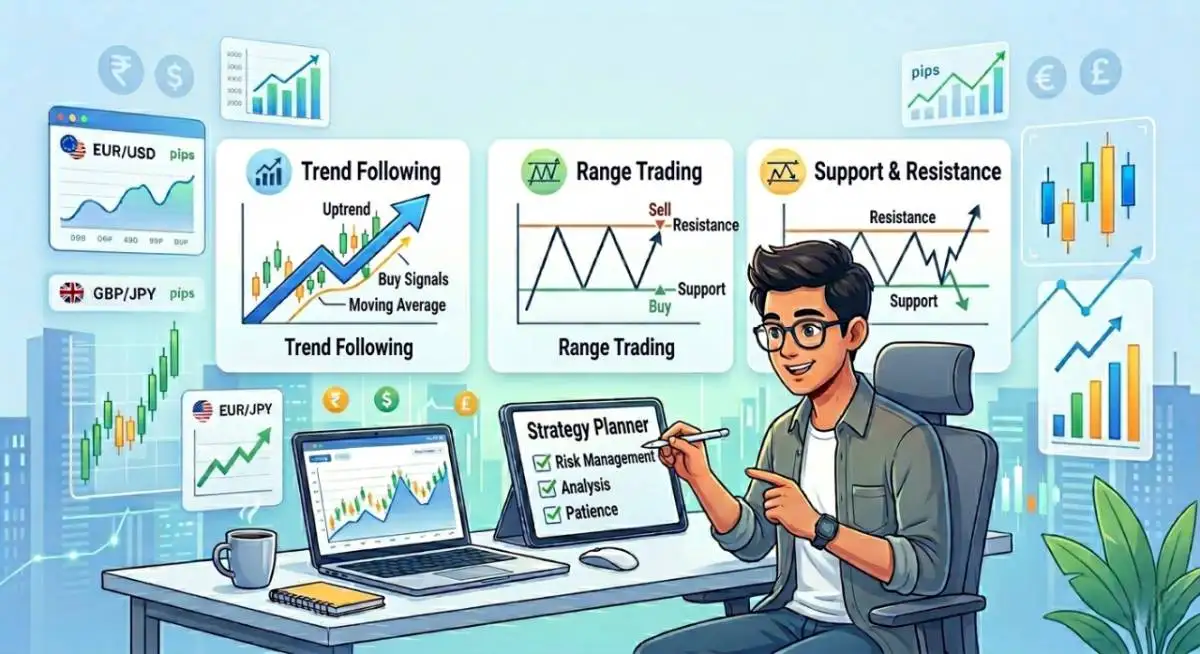
Learn technical analysis, fundamental analysis, and risk management before trading.
Trade Responsibly
Avoid emotional or gambling like trading behavior.
Forex Trading in Muslim Countries
Forex trading is widely practiced in many Muslim majority countries including Pakistan, Malaysia, Indonesia, and the UAE.
Financial regulators such as the Securities and Exchange Commission of Pakistan monitor financial activities in Pakistan, although most forex trading is done through international brokers.
Because Islamic scholars have different opinions, many traders consult religious experts before starting.
Final Thoughts
The question of whether forex trading is halal or haram does not have a single universal answer. Some scholars consider it haram due to interest charges, leverage, and speculation. Others believe it can be halal if conducted under specific conditions such as using Islamic accounts and avoiding interest.
For Muslim traders, the safest approach is to use swap free Islamic trading accounts, avoid interest based transactions, and trade responsibly.
If you are unsure, it is always recommended to consult knowledgeable Islamic scholars who specialize in Islamic finance.
With proper knowledge and adherence to Islamic principles, traders can make informed decisions about whether forex trading is suitable for them.