 Admin
Admin 14 April 2026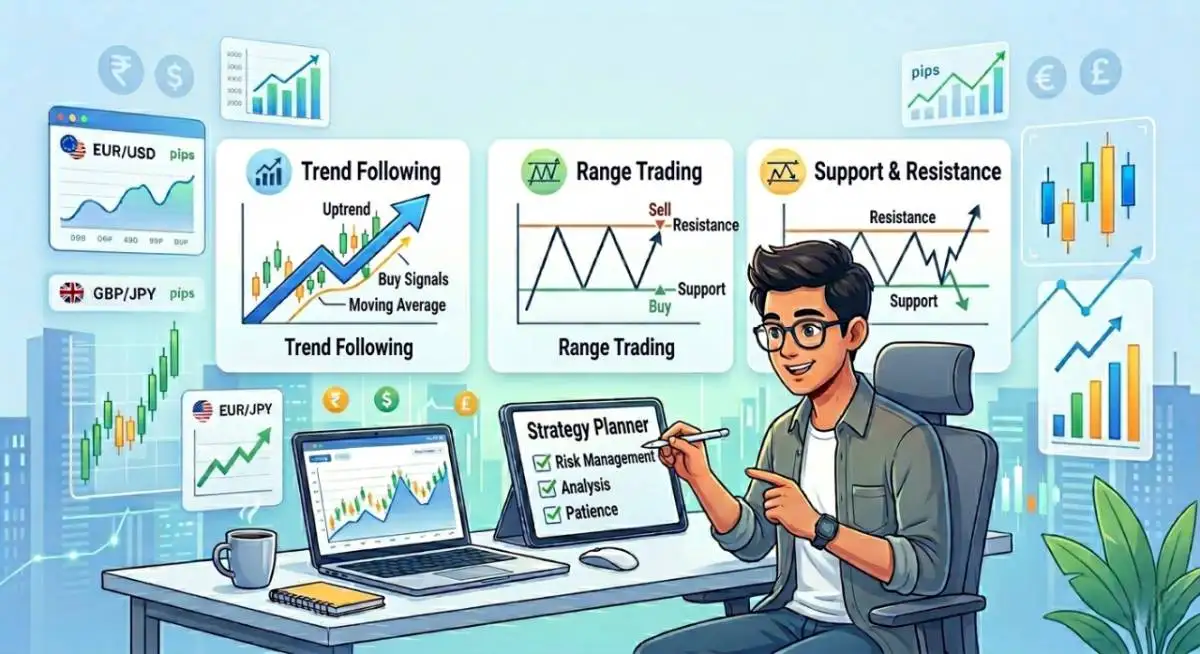
Forex trading has become one of the most popular ways to earn money online. Millions of people around the world trade currencies every day in the foreign exchange market, also known as Forex. However, beginners often enter the market without proper knowledge and lose money quickly. To succeed in forex trading, it is important to learn the right strategies and understand how the market works.
In this article, we will explain the best forex trading strategies for beginners that can help reduce risk and improve your chances of making consistent profits.
What is Forex Trading?
Forex trading is the process of buying and selling currencies to make a profit from price movements. Traders exchange one currency for another, such as EUR/USD, GBP/USD, or USD/JPY.
The forex market operates 24 hours a day, five days a week, making it one of the most active financial markets in the world. Because of its high liquidity and accessibility, many beginners start their trading journey in forex.
Why Beginners Need a Trading Strategy
Many new traders believe they can make money by guessing market movements, but successful traders always follow a clear strategy. A trading strategy helps you:
- Make disciplined trading decisions
- Reduce emotional trading
- Manage risk properly
- Identify high probability trading opportunities
- Maintain consistency in the market
Without a strategy, trading becomes similar to gambling.
1. Trend Following Strategy

The trend following strategy is one of the simplest and most effective strategies for beginners. The basic idea is to trade in the direction of the market trend.
If the market is moving upward, traders look for buy opportunities. If the market is moving downward, traders focus on sell opportunities.
How to Use This Strategy
- Identify the market trend using moving averages or trendlines
- Enter trades in the same direction as the trend
- Avoid trading against the market direction
- Use stop loss to manage risk
Following the trend helps beginners avoid unnecessary risks and increases the probability of profitable trades.
2. Support and Resistance Strategy

Support and resistance levels are key areas where the market often changes direction.
- Support is a price level where the market tends to stop falling.
- Resistance is a level where the market tends to stop rising.
How Beginners Use This Strategy
Traders often:
- Buy near support levels
- Sell near resistance levels
- Wait for price confirmation before entering trades
This strategy is widely used because it helps traders identify strong entry and exit points.
3. Breakout Trading Strategy

A breakout occurs when the price moves beyond a strong support or resistance level. When this happens, the market often makes a strong move in the breakout direction.
How to Trade Breakouts
- Identify consolidation zones
- Wait for price to break support or resistance
- Enter the trade after confirmation
- Place stop loss to protect capital
Breakout trading can be very profitable when markets show strong momentum.
4. Moving Average Strategy

Moving averages are one of the most popular indicators used in forex trading.
They help traders identify trends and potential entry points.
Common Moving Average Strategies
Single Moving Average Strategy
Traders buy when price moves above the moving average and sell when price moves below it.
Moving Average Crossover
This strategy uses two moving averages:
- A short term moving average
- A long term moving average
When the short-term average crosses above the long-term average, it signals a buy opportunity. When it crosses below, it signals a sell opportunity.
5. Price Action Trading

Price action trading focuses on analyzing raw price movements instead of relying heavily on indicators.
Many professional traders prefer this strategy because it provides a clear understanding of market behavior.
Common Price Action Patterns
- Pin bars
- Inside bars
- Engulfing patterns
- Trend continuation patterns
By studying price patterns, traders can predict potential market movements more accurately.
6. Scalping Strategy

Scalping is a short term trading strategy where traders make small profits from multiple trades throughout the day.
Scalpers usually trade on lower timeframes such as 1 - minute or 5 - minute charts.
Key Points for Scalping
- Focus on small price movements
- Use tight stop loss
- Execute trades quickly
- Trade during high volume sessions
Although scalping can be profitable, it requires discipline, speed, and experience.
7. Risk Management Strategy
No trading strategy works without proper risk management. Protecting your capital should always be your top priority.
Important Risk Management Rules
- Never risk more than 1 – 2% of your capital per trade
- Always use a stop loss order
- Avoid overtrading
- Maintain a good risk to reward ratio
Successful traders focus more on protecting their capital than chasing profits.
Tips for Beginner Forex Traders
If you are new to forex trading, keep these tips in mind:
- Start with a demo trading account
- Learn basic technical analysis
- Follow a clear trading plan
- Avoid emotional decisions
- Keep learning and improving your strategy
Forex trading is not a quick rich scheme. It requires patience, discipline, and continuous learning.
Final Thoughts
Forex trading can be a profitable opportunity if approached with the right knowledge and strategy. Beginners should focus on simple and proven strategies such as trend following, support and resistance, breakout trading, and moving averages.
The key to long term success is practice, patience, and proper risk management. Instead of trying to make fast profits, traders should focus on building skills and gaining experience in the market.
By using these beginner friendly strategies and maintaining discipline, you can significantly improve your chances of becoming a successful forex trader.